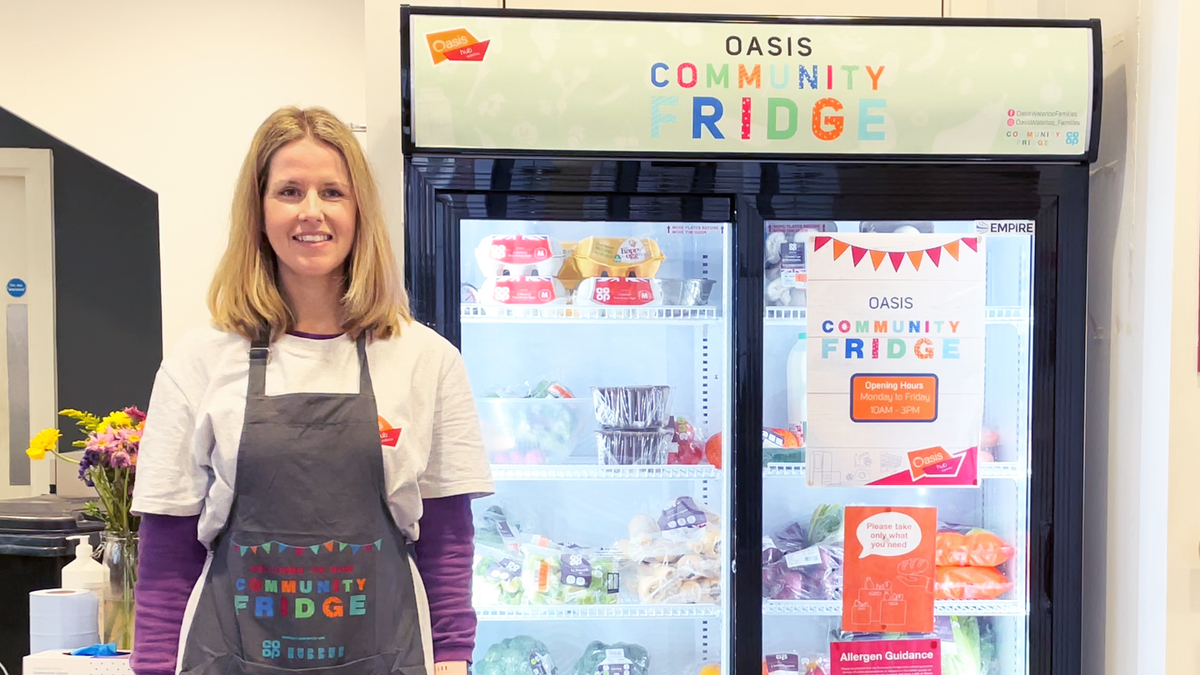
Some food waste is inevitable, but there’s plenty we can do to make the most of the food we buy. Whether that’s preserving food to make it last longer, or regularly cooking meals with leftovers, together we can all make a difference. We hear from Carly Anderson, founder of Waterloo’s Community Fridge, to find out her top waste-reducing tips.
Preventing food waste in the community
I’ve seen first-hand the impact sharing food can have. At our Community Fridge in Waterloo, we’ve saved and redistributed an impressive 460kg of food in our first four months. This food has been shared by people from a mixture of backgrounds, whether they want to pick something up for dinner that night or use our Fridge when visiting the community centre.
And that’s just a snippet compared to what Hubbub has achieved so far. Through the wider Community Fridge Network, Hubbub estimates that last year they have redistributed a staggering 3,150 tonnes of surplus food, that’s the equivalent of 7.1 million meals.
Top tips for extending the shelf life of food
To help reduce food waste, one of the best things to do is to increase the ‘life span’ of the food you do have. There are all sorts of tricks you can try, and these are the ones that I’ve found work best for me:
To prevent potatoes from sprouting…
You may be aware that storing potatoes in a cool, dark cupboard (and not the fridge!) can help increase their shelf life. But to keep them in their best shape for longer, pop an apple in with them. The apple produces ethylene, which can keep the potatoes from sprouting.
To stop carrots going floppy…
If you notice your carrots starting to go floppy in the fridge, you can revive them with a quick and simple trick: simply place them in ice cold water. Alternatively, you can store carrots in water in the fridge: pop them in a jar or bowl with their tops cut off, and change the water regularly. You can do the same with celery too.
To use up leftover fresh herbs…
Often, I find I have a bag of fresh herbs when my recipe only calls for a handful. Instead of putting the rest in the compost, find an empty ice cube tray. Place the chopped fresh herbs into the tray, then fill with olive oil and freeze. Next time your recipe calls for herbs, simply pop out one cube and add to your pan.
Learn to love your leftovers
Eating up leftover is one of the easiest ways to keep waste down, which is where being clever with your recipe planning comes in handy! Here are three of my favourite recipes that use up common leftovers:
For leftover roasties…
I love roast potatoes, and on the odd occasion I have a few leftover from my Sunday dinner, I’ll reuse them in this quick and easy sweetcorn frittata recipe. This one-pan recipe is great for a Monday evening and can easily feed the whole family as it serves six.
For the jar of pesto at the back of your fridge…
Do you often have a leftover jar of pesto lurking in the fridge? Rather than throwing it on some pasta, try this pesto rice salad. This recipe is great for quick lunches and it’s gluten-free too.
For leftover chicken…
Another recipe to use up any leftovers from your Sunday roast is this one-pot chicken and mushroom rice. It also makes use of another common leftover – rice. It’ll be ready in 20 mins, making it a great weeknight option.
And if you’ve still got too much food…
No matter how many tricks you learn, you may still occasionally have some surplus food. Which is where Community Fridges come in, you can share surplus food with your local Community Fridge. Similarly, everyone is welcome to collect food from Community Fridges. It all helps to reduce the amount of food waste.
Find out more about Community Fridges, or find your local Community Fridge here.
More in Sustainability

Communities take action to tackle climate change
In recent conversations, Co-op Members asked us to help them reduce their impact on the environment. So, throughout June, our Member Activators brought their communities together to help them protect nature and take action on climate change. Here Stefan Klueter, Member Activator for Greater Manchester Central and West, tells us about all the activities he…

We’re celebrating 30 years of Fairtrade
‘Be the Change’, let’s take a look back at all the milestones we’ve achieved together

Make swaps for The Great Big Green Week
You may be thinking, what is The Great Big Green Week? Well, it’s the UK’s biggest ever celebration of community action to help tackle climate change and protect nature. This year’s Great Big Green Week is taking place from 8th-16th June and the theme is swaps. There are swaps we can all do to help…